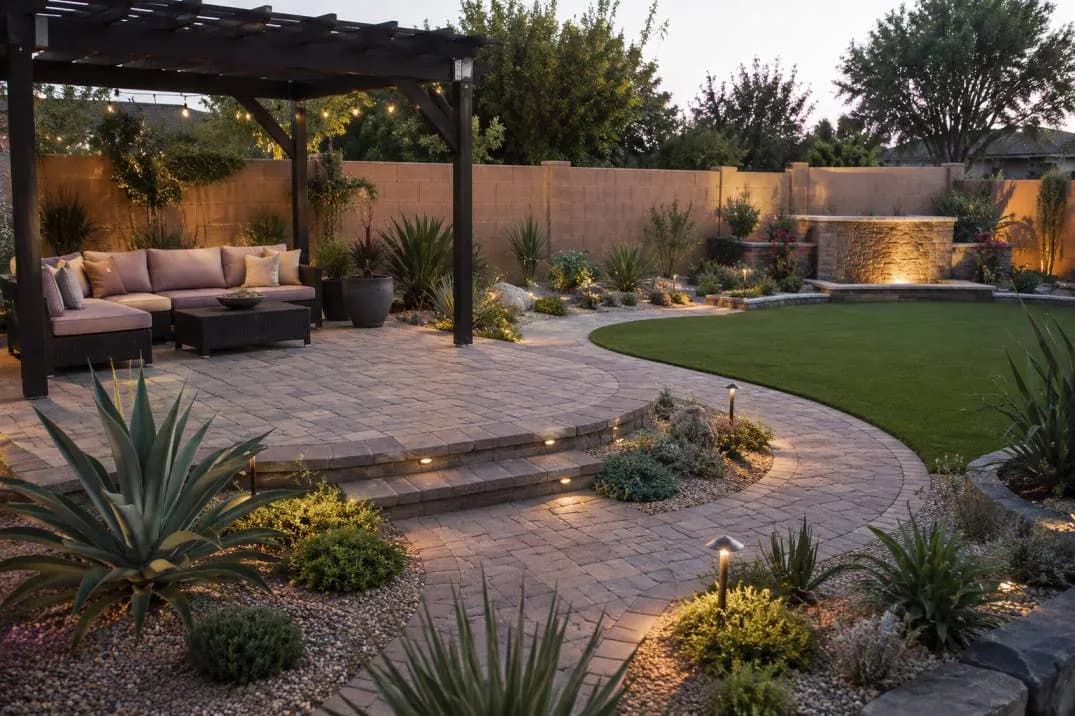
Plunge Pools vs. Traditional Pools: What Fits Best in Compact OC Backyards?
October 15, 20265 min readTulip Landcare Corporation
Navigating Orange County’s Backyard Real Estate Reality
Orange County boasts some of the finest weather in the country, making an outdoor swimming space an appealing lifestyle upgrade. However, the architectural reality of modern OC properties—from the master-planned communities of Irvine and Ladera Ranch to historic cottages in Costa Mesa and coastal properties in Newport Beach—often comes down to limited lot square footage.
When yard space is at a premium, homeowners face an important choice: attempt to squeeze in a traditional full-sized pool, or build a thoughtfully engineered plunge pool. Choosing between the two isn't merely a matter of water volume; it dictates how much usable patio space, landscape buffer, and outdoor living utility you retain for everyday living.
What Defines a Plunge Pool vs. a Traditional Pool?
Before weighing design decisions, it helps to understand how the pool industry defines both options in footprint and function.
The Plunge Pool (Cocktail Pool / Spool)
- Typical Dimensions: Ranges from 7x12 feet up to 10x18 feet, with uniform water depths usually between 4 and 5 feet.
- Core Purpose: Focused on cooling off, low-impact soaking, entertaining, and therapeutic water relaxation.
- Equipment & Features: Frequently configured with dual-purpose equipment—powerful spa jets, resistance swim systems, bench seating around the perimeter, and high-efficiency heaters that convert the body of water into an oversized spa in cooler coastal evenings.
The Traditional Pool
- Typical Dimensions: Usually 15x30 feet or larger, featuring graduating water depths (e.g., 3.5 feet sloped to 6 or 8 feet).
- Core Purpose: Active fitness, dedicated lap swimming, diving (on deeper builds), and recreational family games like volleyball or basketball.
- Footprint Impact: Demands a substantial footprint not just for the water vessel, but for code-mandated walkways, safety clearances, and extensive equipment pads.
Key Factors to Evaluate for Compact OC Lots
When land is restricted, five local elements will dictate whether a plunge pool or traditional installation yields the best return on lifestyle and property value.
1. Municipal Property Setbacks and Easements
Every city in Orange County enforces structural setback regulations for swimming pools and pool equipment. In Irvine or Tustin, for instance, zoning standards often require a 3- to 5-foot clearance between the water's edge and the rear or side property boundary lines, plus dedicated clearances from retaining walls and drainage swales.
In a backyard that is only 25 feet deep, dropping in a 16-foot-wide traditional pool leaves almost zero clearance for code-compliant decking, let alone outdoor furniture. A plunge pool measuring 8x14 feet easily accommodates mandatory perimeter setbacks while leaving ample room for concrete decking, pavers, or permeable softscape.
2. Preserving Functional Outdoor Living Zones
A common misstep in backyard renovations is over-allocating square footage to water. Unless your household swims daily, an oversized pool can dominate the yard, eliminating space for:
- Outdoor kitchens and built-in barbecue islands
- Covered patio seating or pergolas
- Fire pits or modern linear fire features
- Dog-friendly artificial turf or drought-tolerant planting beds
A plunge pool functions as an anchor architectural feature without consuming the entire yard, allowing you to design a balanced, multi-use outdoor living environment.
3. Construction Access and Side-Yard Clearances
In many newer tracts across Rancho Santa Margarita, Lake Forest, and Aliso Viejo, side yards between homes can measure as narrow as 4 to 5 feet. Excavating for a traditional 35-foot pool requires substantial heavy equipment—such as 10-ton excavators and large bobcats—which may not fit down a narrow breezeway without costly crane operations or temporary fence removals on neighboring parcels.
Plunge pools can be excavated with compact mini-excavators and smaller hauling machinery, reducing mobilization headaches, street permitting complications, and the risk of collateral damage to hardscape walkways during construction.
4. Heating Efficiency in a Coastal Climate
While Southern California enjoys warm summers, ocean breezes in coastal and semi-coastal cities like San Clemente, Dana Point, and Huntington Beach can make unheated water chilly for six to eight months of the year.
A 5,000-gallon plunge pool heats rapidly compared to a 20,000-gallon traditional pool. With modern high-efficiency natural gas or electric heat pumps, a plunge pool can be brought to comfortable soaking temperatures in under an hour, turning an otherwise seasonal pool into a year-round backyard amenity.
5. Water Consumption and Maintenance Demands
California water consciousness remains a long-term priority. A smaller water surface dramatically reduces evaporation losses and requires a fraction of the sanitizing chemicals needed to balance a large pool. For busy professionals who prefer relaxing on the weekend rather than skimming debris and managing water chemistry, a compact plunge pool demands minimal upkeep.
Which Option Should You Choose?
A Plunge Pool Is Likely Best If:
- Your yard depth or width is under 35 feet.
- You want dedicated space for outdoor dining, grilling, and fire features alongside your water feature.
- You value the dual utility of a pool by day and an oversized hot tub by night.
- Your primary goal is relaxation, entertaining adults, or cooling down rather than active lap swimming.
A Traditional Pool Is Likely Best If:
- You have an expansive, deep lot (common in custom parcels in San Juan Capistrano, Mission Viejo, or Anaheim Hills).
- Lap swimming or high-energy water sports are non-negotiable for your household.
- You have multiple children who prioritize splash play, slides, or deep-water entry over surrounding patio space.
FAQs
How much backyard space do I actually need for a plunge pool?
Most plunge pools require an overall building envelope of roughly 12x18 to 15x22 feet. This footprint accounts for the water basin itself, structural bond beams, basic safety clearances, and the surrounding concrete coping or paver decking. This makes them workable even in modest patio spaces and zero-lot-line yards.
Can a plunge pool be heated like a spa in winter?
Yes. In fact, one of the primary benefits of a plunge pool is its versatility as a "spool." Because the water volume is typically between 3,000 and 6,000 gallons, modern heating systems can warm the entire vessel quickly, allowing you to use it comfortably during crisp winter evenings in Orange County.
How do Orange County HOA rules affect plunge pool construction?
Most HOAs enforce strict guidelines regarding pool equipment noise, visual screening of pumps, and wall-to-water setback distances. Plunge pools often have an advantage during the architectural review process because their equipment footprints are smaller, run on quiet variable-speed pumps, and fit easily within approved screening enclosures without encroaching on neighbor sightlines.
Whether you envision an intimate plunge pool paired with an integrated fire feature or a complete backyard transformation, Tulip Landcare Corporation provides end-to-end design and construction tailored to your property. Call our team today at (949) 929-0697 to schedule your free on-site design consultation.
Planning a project like this?
We’ll walk your property and put real numbers to the plan — free, with no obligation.