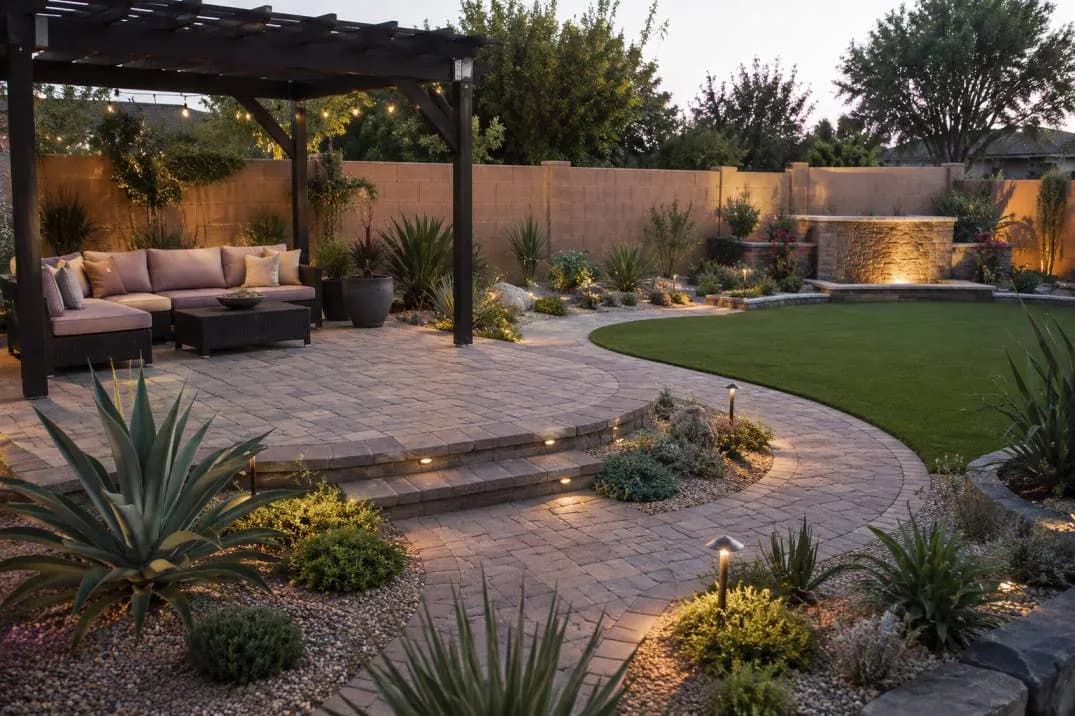
Designing Coastal Hardscapes: Choosing Materials That Survive Salt Air and Moisture
October 8, 20266 min readTulip Landcare Corporation
The Hidden Demands of Coastal Hardscape Design
Designing an outdoor space in coastal Orange County—whether on the bluffs of San Clemente, along the coast highway in Laguna Beach, or within the breezy neighborhoods of Newport Beach and Huntington Beach—comes with unique environmental stresses. While inland properties in Irvine or Anaheim face dry heat, coastal properties endure a relentless cycle of marine fog, ambient airborne salts, and high relative humidity.
These coastal forces act like low-grade sandpaper and chemical solvents on outdoor living features. Poured concrete can pit, mortar joints can crumble, and iron-rich stone can rust or delaminate if chosen without understanding salt crystallization and moisture migration. Selecting materials for coastal hardscapes requires balancing aesthetics with material density, absorption rates, and chemical resistance.
The Mechanisms of Coastal Decay: Salt and Moisture
To choose the right materials, it helps to understand why ordinary building products fail in coastal environments.
- Salt Spalling (Cryptoflorescence): Airborne salt deposits settle into porous surfaces. When marine moisture evaporates under the afternoon sun, dissolved salts recrystallize inside the microscopic pores of the stone or concrete. As these salt crystals grow, they exert internal pressure that exceeds the tensile strength of the material, causing the surface to flake, scale, or crack.
- Subsurface Moisture Retention: The Pacific marine layer creates persistent dampness from dusk through mid-morning. Materials that retain water stay damp longer, fostering algae growth, weakening binder materials, and accelerating efflorescence—the migration of internal mineral salts to the surface.
- Galvanic and Atmospheric Corrosion: Salt ions dramatically accelerate metal oxidation. Rebar inside poorly mixed concrete expands as it rusts, fracturing the surrounding structure from the inside out. Fasteners, outdoor kitchen components, and decorative hardware degrade in a fraction of their normal lifespan.
Paving Surfaces: Choosing Stone and Pavers That Resist Salt
Not all stone is created equal. In coastal zones, porosity and mineral composition are the two most critical metrics.
Porcelain Pavers: The Modern Gold Standard
Outdoor architectural porcelain pavers have quickly become a premier choice for seaside properties in Corona del Mar and Dana Point. Fired at extreme temperatures, exterior porcelain has a water absorption rate under 0.5%. Because moisture cannot penetrate the tile body, salt crystals cannot lodge inside to cause spalling. Porcelain pavers are impervious to salt spray, mold, and coastal freeze-thaw cycles, and they never require chemical sealers to maintain their structural integrity.
Dense Natural Stones
If you prefer the warmth and variation of natural stone, focus on igneous and metamorphic varieties with high density:
- Granite: Highly crystalline and dense, granite resists salt corrosion, acid, and heavy foot traffic. Split-face or flamed finishes provide slip resistance around pool decks without creating deep pockets that trap moisture.
- Quartzite: A dense metamorphic stone composed almost entirely of quartz grains fused by heat and pressure. It offers the look of marble or high-end slate but possesses superior hardness and resistance to chemical erosion.
- Avoid High-Porosity Limestones and Travertines: Soft, light-colored sedimentary stones with high porosity absorb salt spray readily. In coastal climates, untreated travertine frequently develops surface erosion and pitted voids within just a few seasons.
Manufactured Concrete Interlocking Pavers
Interlocking concrete pavers offer exceptional flexibility and structural durability for coastal driveways and patios. However, paver density varies between manufacturers. For coastal installations, insist on high-density architectural-grade pavers with built-in integral sealers and compressive strengths exceeding 8,000 PSI. Permeable paver systems are particularly valuable in coastal Orange County cities that enforce strict stormwater runoff and urban water-capture regulations.
Structural Elements: Retaining Walls, Mortar, and Hardware
Vertical surfaces—retaining walls, seat walls, pillars, and planter boxes—require just as much coastal protection as ground-level surfaces.
Mortar Selection and Joint Protection
Traditional mortar mixtures containing high ratios of hydrated lime can break down under coastal dampness. When building masonry walls or mortared flagstone patios near the ocean, contractors should use Type S mortar formulated with high compressive and tensile bonding strength. Hydrophobic mortar admixtures can be blended on-site to drastically reduce water penetration through joint lines.
Cap Stones and Overhangs
Every exposed freestanding wall, planter, or fire feature must be capped properly. Coping stones should feature a minimum one-inch overhang with an integrated drip edge on the underside. This simple architectural detail forces rainwater and condensing coastal fog to drip clear of the vertical wall face rather than running down the veneer and driving salt into the seams.
Fasteners and Structural Metals
Standard galvanized steel is insufficient within five miles of the ocean. For footings, pergolas, ledger boards, and kitchen framing:
- Use 316 Marine-Grade Stainless Steel for all exposed structural hardware, brackets, screws, and anchor bolts.
- If utilizing steel inside concrete, ensure a minimum of two to three inches of clean concrete coverage over the rebar, or use epoxy-coated steel to prevent moisture migration from reaching the metal core.
Outdoor Kitchens and Fire Features Along the Coast
Coastal living naturally revolves around cooking and entertaining outdoors, but coastal kitchens and fire pits need specialized materials to last.
- Island Framing: Avoid pressure-treated wood framing that can warp in coastal humidity. Welded heavy-gauge aluminum or structural concrete masonry units (CMU) provide an inert, rot-proof substructure.
- Appliance Selection: Standard 304-grade stainless steel kitchen appliances can develop light surface pitting (tea staining) within months along the ocean. Opt for commercial 316-grade stainless appliances, or commit to regular protective treatments with specialized stainless steel barriers.
- Fire Features: Salt air ruins standard carbon-steel burner rings rapidly. Ensure your custom fire pit or fire table utilizes marine-grade 304 or brass burners. Brass is naturally impervious to salt corrosion and will not rust out, guaranteeing a clean flame pattern year after year.
Maintenance Protocols for Coastal Hardscapes
Even resilient materials require periodic attention along the coast. Implement these proactive practices to preserve your outdoor living investment:
- Routinely Rinse with Fresh Water: Once or twice a month, rinse patio surfaces, wall caps, and metal outdoor appliances with a garden hose. Washing away dry surface salt stops the crystallization cycle before it can migrate into porous joints.
- Penetrating Silane-Siloxane Sealers: For concrete pavers and natural stone, use deep-penetrating breathable sealers rather than topical acrylic coatings. Topical coatings trap moisture underneath, leading to cloudy, peeling surfaces. Penetrating sealers coat the inner pore structures, allowing vapor to breathe out while preventing salt water from seeping in.
- Ensure Positive Drainage: Standing water is the enemy of coastal hardscapes. Every patio surface should pitch away from foundations and living areas at a minimum slope of 1/4 inch per foot toward integrated channel drains or landscape bio-swales.
FAQs
How often should coastal hardscape stone and pavers be sealed in Orange County?
Dense natural stone and concrete pavers installed within a few miles of the coast should typically be treated with a high-grade penetrating sealer every two to three years. Areas subject to continuous ocean breezes or pool splashout may benefit from inspection every 18 to 24 months. Always use breathable, non-film-forming sealers.
Are porcelain pavers durable enough for driveways and high-traffic patios near the ocean?
Yes. Thick exterior porcelain pavers (typically 20mm or 30mm thick) have compressive strengths that surpass standard poured concrete. When installed over an engineered, compacted base or an approved concrete slab using manufacturer-approved setting systems, they easily support vehicular traffic and heavy outdoor furniture without cracking or staining.
Can I use decomposed granite (DG) for pathways in a coastal yard?
Decomposed granite can be used, but standard loose DG tends to track heavily into homes during damp marine layer mornings. For coastal properties, stabilized decomposed granite or resin-bound aggregate is strongly recommended. The binding additive locks the crushed stone together, shedding surface moisture and preventing the path from becoming muddy or rutted during coastal fog season.
If you are planning an outdoor living space, pool deck, or structural hardscape along the Orange County coast, Tulip Landcare Corp provides expert design, material selection, and installation engineered to withstand the local environment. Call us today at (949) 929-0697 to schedule your free estimate.
Planning a project like this?
We’ll walk your property and put real numbers to the plan — free, with no obligation.