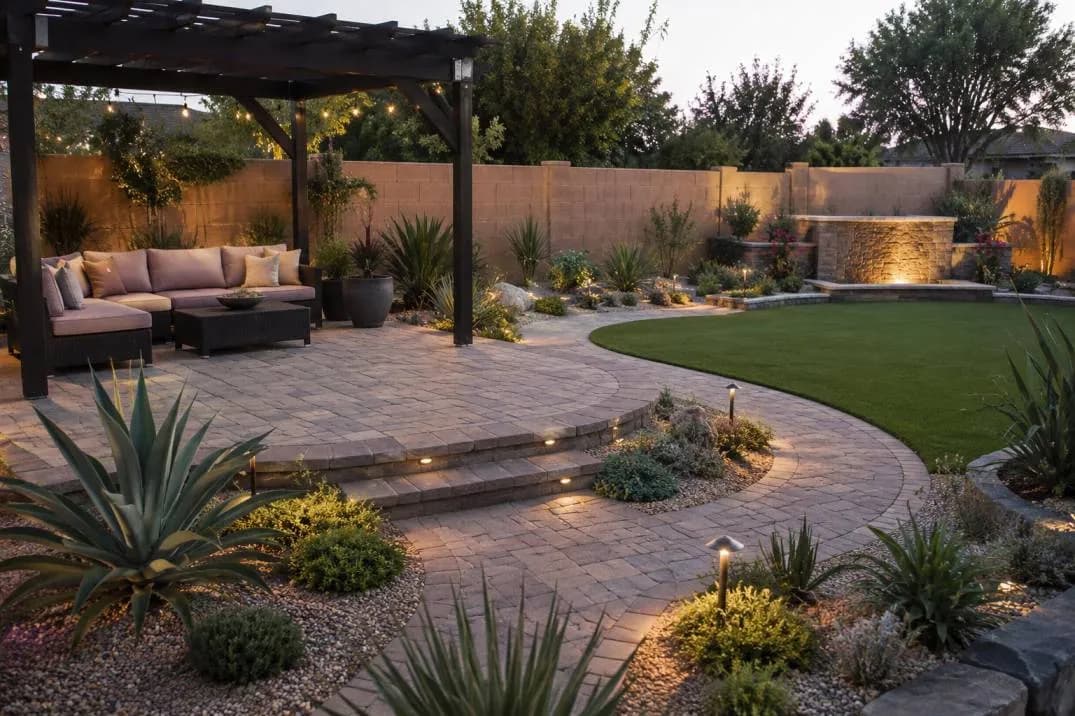
Artificial Turf for Dogs in Orange County: Infill Choices, Drainage, and Heat Reduction
October 26, 20266 min readTulip Landcare Corporation
Natural grass struggles under the twin pressures of Southern California climate regulations and active family dogs. Between mandatory water cutbacks, muddy paw prints during winter rain showers, and dead yellow patches caused by nitrogen in dog urine, maintaining a green lawn across Orange County can feel like an uphill battle. Modern pet turf offers a dependable alternative, but installing artificial grass for dogs requires an engineered approach distinct from purely decorative installations.
Without proper planning for subsurface drainage, antimicrobial infill, and solar heat management, a pet turf installation will quickly develop persistent ammonia odors and dangerously high surface temperatures. Understanding how these systems work together ensures your backyard remains clean, cool, and comfortable for both pets and family.
Subsurface Drainage: Managing Pet Waste on Orange County Soils
A pet turf system is only as effective as the sub-base beneath it. Much of Orange County—from the inland hills of Mission Viejo and Lake Forest to the flat expanses of Irvine and Santa Ana—features expansive, slow-draining clay soils. If pet urine washes through the turf backing only to hit an impermeable clay layer, it pools and ferments, creating deep-seated odors that surface treatments cannot eliminate.
To ensure rapid, clean drainage, pet installations require a specialized profile:
- Fully Permeable Backing: Standard turf backings use a hole-punched polyurethane design that drains roughly 30 inches of water per hour. Pet-grade turf utilizes a 100% permeable or woven backing that drains hundreds of inches per hour, allowing urine and wash water to pass directly through the entire backing rather than funneling toward sporadic drainage holes.
- Aggregate Base Construction: Instead of fine stone dust or unwashed decomposed granite that packs down into an impermeable cement-like layer, dog turf demands a dynamic, open-graded crushed rock base (such as 3/8-inch or 3/4-inch crushed rock topped with a clean aggregate). This structure creates internal void space that speeds liquid away from the surface.
- Subsurface Slope and French Drains: The native soil beneath the aggregate base must be carefully graded with a minimum 1% to 2% fall away from outdoor living structures and foundation walls. In properties with heavy clay, integrating perforated drainage pipe networks tied into yard discharge systems prevents sub-base saturation.
In coastal microclimates like Newport Beach and Huntington Beach, sandier native soils drain slightly faster, but pet-optimized base preparation remains essential to prevent concentrated bio-waste buildup.
Selecting the Right Pet-Safe Infill
Infill serves several structural functions: it ballast the turf against movement, keeps the synthetic grass blades standing upright, and protects the backing from ultraviolet radiation. In a dog yard, however, standard silica sand should never be used. Raw silica sand absorbs urine like a sponge, traps moisture, and becomes an incubator for odor-causing bacteria.
For dog owners, infill selection narrows down to three primary categories:
1. Zeolite (Clinoptilolite) Infill
Zeolite is a natural, 100% organic volcanic mineral characterized by a honeycomb molecular structure. Its negatively charged surface attracts and captures positively charged ammonium ions present in pet urine, neutralizing ammonia before it can convert into a foul-smelling gas. When winter rains fall across Orange County, or when the turf is thoroughly rinsed, sodium ions from water replace the ammonium ions, naturally recharging the mineral's absorption capacity.
2. Antimicrobial Acrylic-Coated Sand
Coated sands, such as Envirofill, are composed of uniform quartz cores coated with acrylic resin and infused with antimicrobial technology (like Microban). This coating prevents bacteria, mold, and mildew from multiplying on the infill particles. The smooth, rounded granules will not compact, ensuring that liquids pass freely into the base below. It does not degrade, produces minimal dust, and resists tracking on paws into the house.
3. Non-Absorbent Ceramic or Polymer Beads
Engineered synthetic beads do not absorb liquids at all. Moisture flows around them directly into the sub-base. While they provide excellent ballast and hygiene, they generally provide less chemical neutralization of ammonia compared to natural zeolite, requiring a more disciplined rinsing routine.
Combating Summer Heat on Dog Paws
Artificial turf blades are made from polyethylene or polypropylene, materials that naturally absorb solar radiation. On summer afternoons in inland Orange County—such as Anaheim, Ladera Ranch, or Rancho Santa Margarita—ambient temperatures in the 80s or 90s can push synthetic turf surface temperatures upward of 150°F on standard installations. While coastal breezes keep Dana Point or Laguna Beach slightly cooler, direct midday sunlight still heats turf past comfortable thresholds for sensitive paw pads.
Protecting your dog's paws requires several passive and active cooling strategies:
- Cool-Yarn Turf Technology: Premium turf manufacturers use reflective pigments and unique blade cross-sections (such as 'W', 'V', or 'Wave' shapes) that diffuse sunlight rather than absorbing it. Turf engineered with heat-reflective technology typically stays 10°F to 15°F cooler than standard flat-blade products.
- Evaporative Cooling Systems: Certain infill products are formulated to store and slowly release moisture. When given a brief 30-to-60-second hose down before peak afternoon sun, the infill holds moisture within its pores and releases it through evaporation over several hours, lowering surface temperatures by 30°F to 50°F.
- Landscape Architecture and Shade Planning: The most reliable way to maintain safe surface temperatures is physical shade. When designing an outdoor space, integrate dog turf zones beneath the canopy of shade trees, alongside existing covered patios, or underneath custom cedar or aluminum pergolas. In open yards, fabric shade sails block peak midday UV rays while maintaining ventilation.
Practical Maintenance for Long-Term Hygiene
Even with top-tier materials and superior drainage, pet turf is low-maintenance, not zero-maintenance. A consistent routine keeps the yard smelling clean year-round:
- Solid Waste Removal: Pick up solids promptly, just as you would on a natural lawn. Allow softer waste to dry slightly for cleaner removal.
- Weekly Rinsing: A regular spray-down with a standard hose nozzle dilutes lingering salts and guides remaining liquids through the base.
- Monthly Enzyme Applications: During hot, dry summer months when rains are nonexistent in Southern California, apply a live enzymatic cleaner via a hose-end sprayer. Enzymatic treatments break down stubborn organic compounds and uric acid crystals trapped deep in the aggregate base.
FAQs
How do I prevent dog urine odors from building up in synthetic turf?
Preventing odor requires a combination of 100% permeable turf backing, a clean-draining aggregate rock base rather than compacted decomposed granite, and an odor-neutralizing infill such as zeolite or antimicrobial coated sand. Regular hosing and monthly applications of live enzymatic cleaner will break down residual uric acid before bacteria can produce gas.
Is artificial turf safe for dogs' paws during hot Orange County summers?
Turf can become very warm in direct, high-noon summer sunlight, particularly in inland Orange County neighborhoods. To keep paws safe, select cool-yarn turf products with heat-reflective pigments, utilize evaporative-cooling infills, provide structural shade with pergolas or shade sails, and avoid letting pets run on unshaded turf during peak midday heat without a quick surface rinse.
Can dogs dig through or tear up modern pet-grade turf?
High-quality pet turf features heavy-duty backing fabrics with tuft-bind strengths exceeding 10 to 12 pounds, making it virtually impossible for dogs to rip individual blades or tear through the backing with their claws. Ensuring the perimeter edges are mechanically secured along concrete footings, headers, or bender board eliminates exposed seams where curious dogs might attempt to dig.
Ready to transform your yard into a clean, pet-friendly outdoor space? Contact the team at Tulip Landcare Corp for a comprehensive site evaluation and free estimate by calling (949) 929-0697.
Planning a project like this?
We’ll walk your property and put real numbers to the plan — free, with no obligation.